



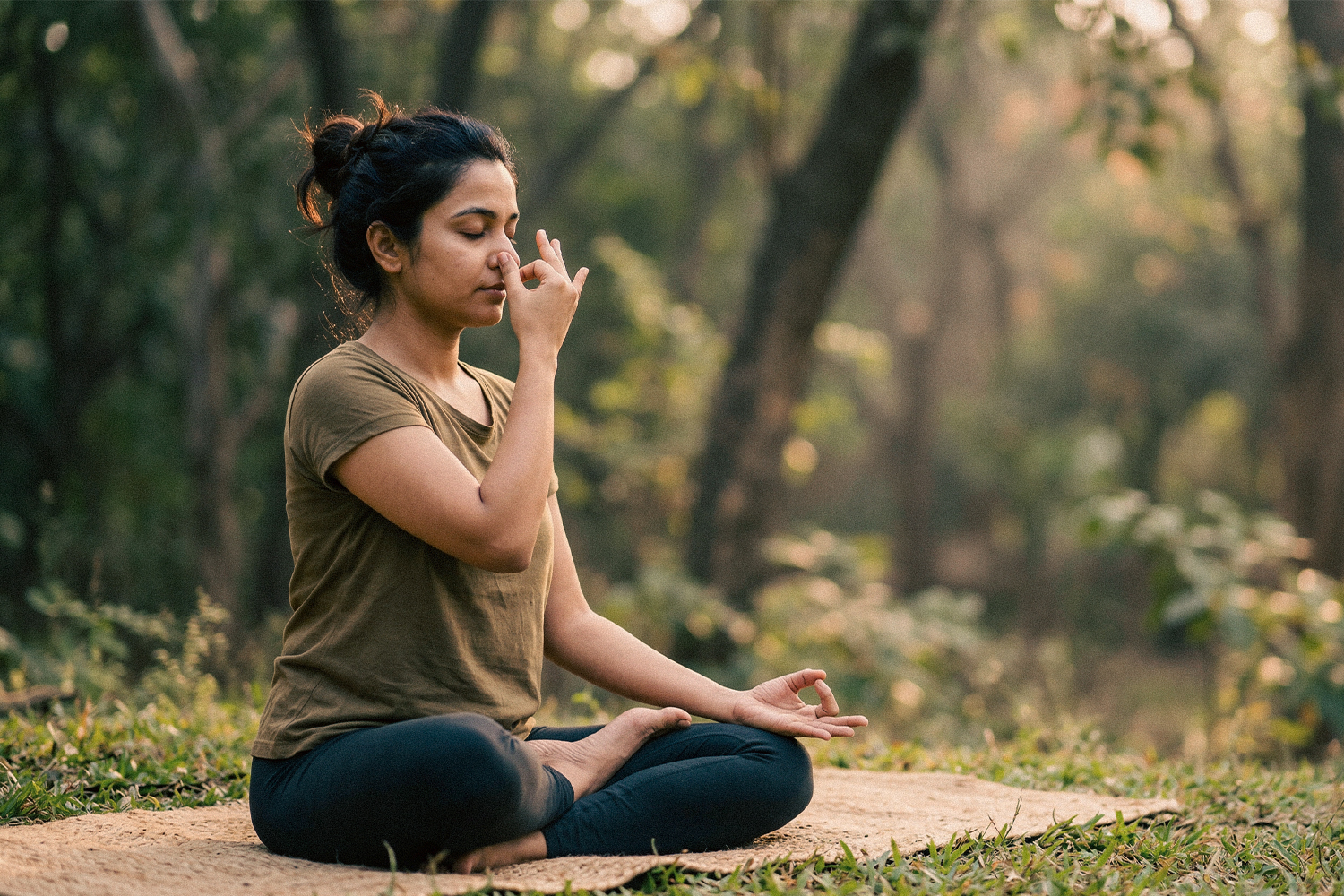
5 Powerful Pranayama Techniques to Boost Energy Levels
There is something most people do approximately 20,000 times a day without ever thinking about it.
Breathe.
And yet, the way you breathe has a direct impact on your energy levels, your stress response, your focus, your sleep, and your overall health. Most of us breathe shallowly, high in the chest, using only a fraction of our lung capacity. It is functional enough to keep us alive, but far from enough to help us truly thrive.
Pranayama, the ancient yogic science of breath control, changes that. Practised for thousands of years in India as part of the broader yoga tradition, pranayama works by consciously regulating the breath to influence the body’s nervous system, oxygen supply, and energy flow. Modern science has now caught up with what practitioners have always known, confirming that controlled breathing exercises produce measurable changes in heart rate, cortisol levels, blood pressure, and brain activity.
If you are constantly fatigued, mentally foggy, or running on stress, your breath may be one of the most powerful and underused tools available to you.
Here are five pranayama techniques that genuinely work, why they work, and how to start.
Why Pranayama Works
Before getting into the techniques, it helps to understand the mechanism behind breathwork benefits.
Most people in modern life spend far too much time in sympathetic overdrive. Slow, conscious, deep breathing directly activates the parasympathetic nervous system through the vagus nerve. It lowers cortisol, slows the heart rate, and shifts the body out of stress mode into a state where healing, energy restoration, and clear thinking become possible.
Yoga breathing is not just relaxation. It is physiological recalibration.
The Best Time to Practise
Morning pranayama is considered the most beneficial time to practise, and there are good reasons for its efficacy beyond tradition.
In the early morning, your stomach is empty, your mind is relatively clear, and the air is fresher. Practising pranayama before breakfast allows the techniques to work without the distraction of digestion, and starting your day with intentional breathwork sets a calmer, more focused tone for everything that follows.
That said, pranayama can be practised at other times too. Early evening, before dinner, is a good second option. It helps transition your nervous system from the demands of the day to a state of ease. Avoid practising immediately after a meal or just before bed if you are doing more energising techniques like Kapalbhati.
At Trē Wellness, morning pranayama is often incorporated into the personalised Dinacharya we build for our guests. It is one of the simplest additions to a daily routine that produces a noticeable shift in energy and stress within days.
5 Pranayama Techniques Worth Practising
1. Deep Breathing
If you are completely new to pranayama and looking for a gentle entry point, deep breathing is the best place to begin. It is a slow, full breathing exercise that systematically fills the lungs from the bottom to the top in three stages: the belly, the ribcage, and the upper chest.
Most adults habitually breathe only into the upper chest, using perhaps 30 percent of their lung capacity. Deep breathing retrains the breath to use the full volume of the lungs, significantly increasing oxygen intake with each breath and activating the body’s relaxation response almost immediately.
How to practise: Lie down or sit comfortably. Place one hand on your belly and one on your chest. Breathe in slowly, filling your belly first until it rises, then expand your ribcage, then your upper chest. Exhale in reverse, chest first, then ribcage, then belly. One full breath should take around six to eight seconds. Practise for five to ten minutes.
This is one of the most effective morning pranayama practices for beginners because it is easy to follow, produces immediate calm, and sets the breath pattern for the rest of the day.
2. Anulom Vilom (Alternate Nostril Breathing)
Anulom Vilom is one of the most well-researched and widely recommended pranayama techniques for both beginners and experienced practitioners. It involves alternating the breath between the left and right nostrils, which according to yogic tradition balances the two hemispheres of the brain and the opposing energy channels in the body.
Modern research supports its effects on the cardiovascular system, showing that regular practice lowers blood pressure, reduces heart rate variability, and significantly decreases anxiety.
How to practise: Sit comfortably with your spine upright. Close your right nostril with your right thumb and inhale slowly through the left nostril for a count of four. Close both nostrils briefly. Release the right nostril and exhale slowly for a count of four. Inhale through the right nostril. Close both briefly. Exhale through the left. That is one round. Start with five to ten rounds and build gradually.
This is an ideal stress relief breathing practice, particularly effective when anxiety is high or the mind feels scattered.
3. Kapalbhati Pranayama (Skull-Shining Breath)
Kapalbhati pranayama is one of the most energising breathwork techniques in yoga. The name translates to skull-shining, referring to the clarity of mind it is said to produce. It involves short, sharp, forceful exhalations through the nose, with passive inhalations following naturally.
The rapid exhalations engage the abdominal muscles and create a pumping action that stimulates the digestive organs, generates internal heat, clears the respiratory tract, and significantly increases oxygen supply to the brain. Many people report feeling immediately more alert and energised after just two to three minutes of practice.
How to practise: Sit with a straight spine. Exhale sharply through both nostrils by pulling your lower abdomen inward. Let the inhalation happen naturally without effort. Begin with one exhalation per second. Start with 30 strokes and gradually increase to two or three rounds of 60 as you build capacity.
Note: Kapalbhati is not recommended for people with high blood pressure, heart conditions, recent abdominal surgery, or during pregnancy. At Trē, our doctors assess suitability before recommending specific pranayama techniques as part of a wellness programme.
4. Bhramari (Humming Bee Breath)
Bhramari is one of the most immediate and accessible techniques for stress relief breathing. It involves producing a humming sound on the exhalation, which creates a vibration that directly calms the nervous system.
The humming activates the vagus nerve and produces nitric oxide in the nasal sinuses, a molecule that plays a role in lowering blood pressure and improving cellular oxygen utilisation. It is also one of the most effective pranayama for beginners because it requires no specific counting or complex breathing ratios.
How to practise: Sit quietly. Close your eyes. Gently place your index fingers on your ears to block external sound. Take a deep breath in. On the exhalation, produce a smooth humming sound, like a bee, from the back of your throat. Feel the vibration in your skull and chest. Repeat five to seven times.
Bhramari is particularly helpful before sleep, during moments of high anxiety, or any time you need to step back from an overwhelming situation quickly.
5. Bhastrika (Bellows Breath)
Bhastrika is one of the most powerful energy boosting yoga breathing techniques. Unlike Kapalbhati, where only the exhalation is active, Bhastrika involves both forceful inhalations and exhalations, making it more intense and more warming.
It dramatically increases oxygen levels in the blood, stimulates the sympathetic nervous system in a controlled and beneficial way, clears congestion in the respiratory tract, and produces a significant surge of energy and mental clarity. Many practitioners describe it as a natural alternative to caffeine.
How to practise: Sit with a straight spine. Inhale deeply and forcefully through both nostrils, expanding the chest fully. Exhale forcefully through both nostrils. Maintain a rhythmic, even pace. Begin with ten breaths and rest. Work up to three rounds of twenty over several weeks of consistent practice.
Bhastrika should also be approached with caution by anyone with cardiovascular conditions, hypertension, or respiratory conditions. Starting slowly and building over time is always the right approach.
Pranayama at Trē Wellness
At Trē Wellness, yoga breathing and pranayama are not just wellness add-ons. They are integrated into guest programmes as part of a doctor-led, whole-person approach to health. Our yoga and wellness experts guide guests through appropriate techniques based on their specific health conditions, energy levels, and goals.
Whether you are dealing with chronic fatigue, anxiety, sleep issues, or simply looking to build a sustainable energy boosting yoga practice, pranayama offers a tool that is free, always available, and profoundly effective when practised consistently.
The breath is the one system in your body that is both automatic and within your conscious control. That makes it the most accessible entry point into your own healing.
FAQs
What are the most effective pranayama techniques for beginners?
Dirga (three-part breathing), Anulom Vilom, and Bhramari are the best starting points. They are gentle, easy to learn, and produce noticeable results without requiring prior experience.
How does pranayama help increase energy and reduce fatigue?
Pranayama increases oxygen supply to the blood and brain, activates the parasympathetic nervous system, reduces cortisol, and improves lung capacity. Together, these effects produce a genuine and sustained increase in energy.
What is the best time to practice pranayama for maximum benefits?
Early morning on an empty stomach is ideal. It sets a calm, focused tone for the day and allows techniques to work without the interference of digestion. Early evening before dinner is a good second option.
What are the benefits of Anulom Vilom and Kapalbhati pranayama?
Anulom Vilom balances the nervous system, reduces blood pressure and anxiety, and improves focus. Kapalbhati energises the body, stimulates digestion, clears the respiratory tract, and sharpens mental clarity.
Can breathing exercises reduce stress and improve mental clarity?
Yes, consistently. Slow, controlled breathing directly activates the vagus nerve and lowers cortisol. Even five minutes of intentional breathwork has been shown to reduce perceived stress and improve concentration.

