



Yoga for Healthy Aging: Supporting Wellness at Every Stage of Life
There is a quiet misconception that yoga is for the young and flexible. That it belongs to a certain body type, a certain age group, a certain level of fitness. Walk into most yoga studios and it is easy to see why that impression exists.
But the origins of yoga tell a very different story. Yoga was never designed for performance. It was designed for longevity. For keeping the body mobile, the mind clear, and the nervous system steady across every decade of life. The older you get, the more it has to offer.
At Trē Wellness, yoga is not an add-on or a morning activity to fill time between treatments. It is a core part of how the body heals, maintains, and ages well.
What Happens to the Body as We Age
From the mid-forties onwards, the body starts to change in ways that are gradual but significant. Muscle mass begins to decline. Joints stiffen. Balance becomes less reliable. Sleep quality often drops. The nervous system becomes more reactive to stress, and recovery from illness or exertion takes longer than it used to.
Hormonal changes in both men and women affect bone density, weight distribution, mood, and energy. Digestion slows. Circulation becomes less efficient. And the mental load of decades of living, work, family, and responsibility can leave the mind in a state of low-grade tension that rarely fully lifts.
None of this is inevitable in its severity. Much of it can be slowed, eased, or meaningfully improved. Yoga is one of the most well-researched tools available for doing exactly that.
The Advantages of Yoga for Older Adults
The advantages of yoga become more pronounced, not less, as the body ages. Here is why.
Yoga builds and maintains the kind of functional strength that keeps daily life manageable. Not bulk, but the deep muscular stability that supports the spine, the hips, the knees, and the shoulders. The joints that tend to cause the most trouble as the years go on.
It improves flexibility steadily and safely, without the impact that other forms of exercise place on ageing joints. It trains balance in a way that directly reduces the risk of falls, which is one of the most significant health concerns for people in their sixties and beyond.
Yoga also works on the breath and the nervous system in a way that nothing else quite matches. A consistent practice lowers cortisol, improves heart rate variability, and brings the body out of the low-level stress state that many older adults have simply come to accept as normal. The mental clarity and emotional steadiness that come from regular yoga practice are not incidental. They are part of the design.
For those managing weight, yoga for weight loss is not about high-intensity movement. It works by improving metabolism, reducing stress-related weight retention, supporting hormonal balance, and building a more consistent relationship with the body and its signals.
Yoga for Beginners: It Is Never Too Late to Start
One of the most important things to understand about yoga for beginners is that starting later in life is not a disadvantage. In many ways, it is the opposite. Older beginners tend to bring patience, self-awareness, and a genuine motivation to feel better, all of which make for a more considered and sustainable practice.
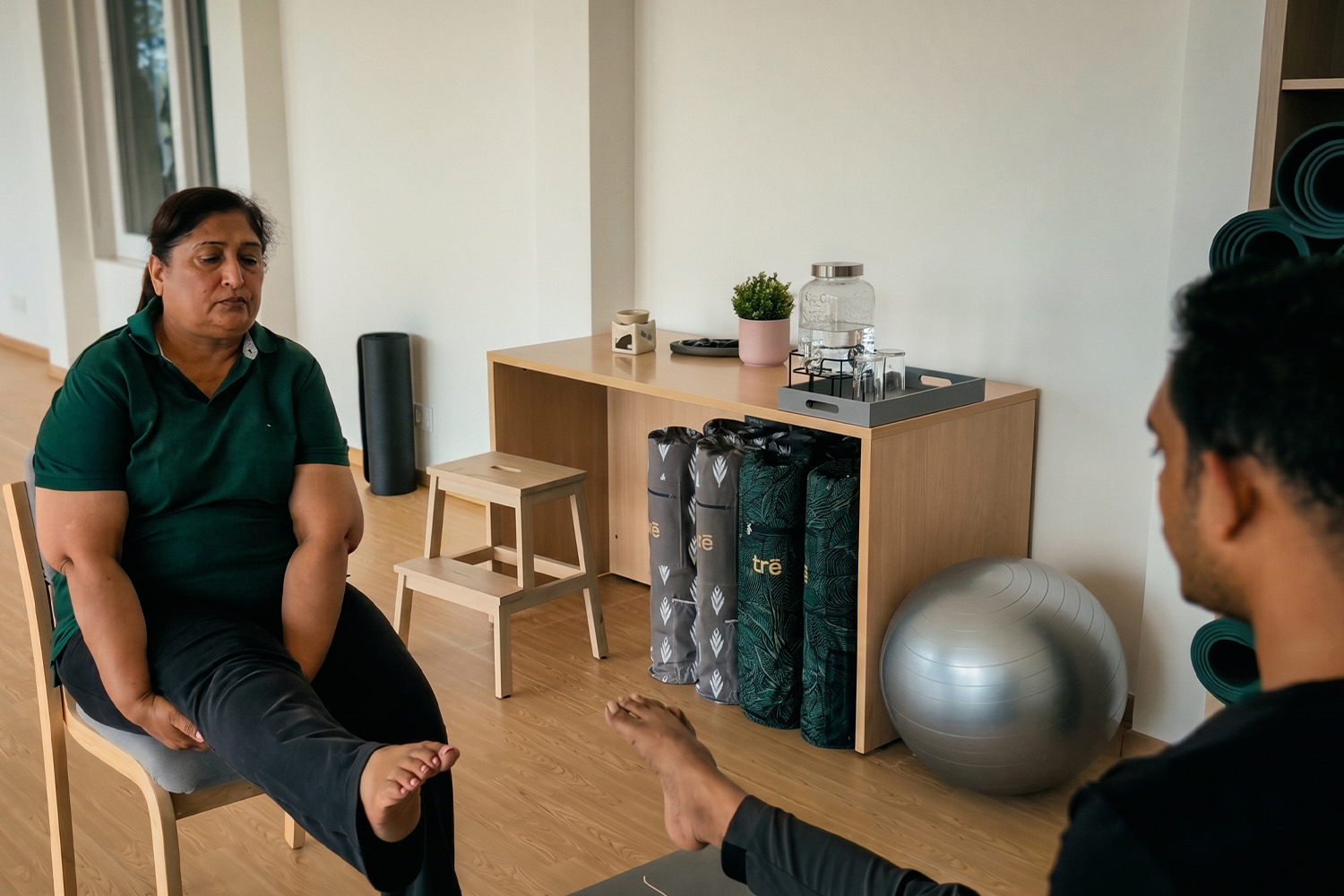
At Trē Wellness, yoga programs for older adults begin exactly where the individual is. There is no expectation of prior experience, no pressure to achieve specific yoga asanas, and no competition. The starting point is a conversation about what the body currently needs and what feels safe and appropriate.
From there, the practice is built gradually. Foundational postures that improve stability and mobility. Breathwork that calms the nervous system. Gentle sequences that address specific concerns like joint stiffness, lower back pain, poor sleep, or digestive sluggishness. Everything is adapted to the individual, because a seventy-year-old with healthy joints needs a different practice from a sixty-year-old recovering from surgery.
Yoga Asanas That Specifically Support Aging Well
Certain yoga asanas are particularly valuable for older adults. Poses that open the hips and lower back address some of the most common sites of stiffness and pain. Standing poses build the leg strength and balance that decline most noticeably with age. Gentle inversions support circulation and lymphatic flow. Seated and supine poses offer deep release without putting weight through compromised joints.
Restorative yoga, which uses props and long holds to allow the body to fully release tension, is especially beneficial for older adults dealing with chronic stress, poor sleep, or fatigue. It works directly on the parasympathetic nervous system, the part responsible for rest, repair, and recovery.
Pranayama, or breathwork, is often underestimated but is one of the most powerful tools in the yoga toolkit for aging well. Slow, controlled breathing has measurable effects on blood pressure, anxiety, sleep quality, and immune function. At Trē, breathwork is always included as part of the yoga experience, not treated as a separate or optional practice.
Yoga for Old Age: What the Research Actually Shows
The evidence supporting yoga for old age is substantial and growing. Studies consistently show improvements in balance, flexibility, bone density, sleep quality, cognitive function, and mood in older adults who practice regularly. There is also meaningful evidence for its role in managing conditions common in older age, including arthritis, hypertension, type 2 diabetes, and chronic lower back pain.
What the research reflects is what practitioners have known for a very long time. Yoga works because it addresses the whole person. It is not isolating a muscle group or targeting a single symptom. It is working on the body, the breath, and the mind simultaneously, which is precisely what aging well requires.
How Trē Approaches Yoga as Part of a Wellness Program
At Trē Wellness, yoga is never offered in isolation. It is part of a broader program that may include Ayurvedic therapies, naturopathy treatments, therapeutic nutrition, and structured rest, all working together toward the same goal.
For older adults, this integrated approach makes a significant difference. Yoga loosens what Ayurvedic oil therapies have softened. Nutrition supports what yoga is building. Rest allows the body to consolidate the progress made during movement. Each element reinforces the others, and the result is more than any single therapy could achieve on its own.
Yoga at Trē is also taught with an understanding of the therapeutic context each guest is in. Practitioners are not running a general class. They are working with individuals who have specific health histories and specific goals, and the practice reflects that.
Aging well is not about slowing down in the sense of doing less. It is about doing the right things, consistently, with care and intention. Yoga, practiced this way, is one of the most reliable paths to exactly that.
Frequently Asked Questions
Q1. How does yoga support healthy aging?
Yoga maintains muscle strength, joint mobility, and balance while working directly on the nervous system and hormonal health. Regular practice reduces inflammation, improves sleep, and supports mental clarity, all of which become increasingly important as the body ages. The advantages of yoga accumulate over time, making it one of the most valuable long-term investments in health available.
Q2. Which yoga poses are beneficial for seniors?
Standing poses that build leg strength and balance, hip and lower back openers, gentle seated stretches, and restorative poses are all particularly valuable. At Trē, yoga asanas are selected and adapted based on the individual’s health history and current physical condition, so every guest works with poses that are appropriate and beneficial for them specifically.
Q3. Can yoga help improve balance and prevent falls?
Yes, and this is one of the most well-evidenced benefits of yoga for old age. A consistent yoga practice trains the stabilising muscles and proprioceptive awareness that directly reduce fall risk. Even a few weeks of regular practice can produce noticeable improvements in balance and coordination.
Q4. Are Trē Wellness yoga programs suitable for older adults?
Absolutely. Trē designs yoga programs around the individual regardless of age or prior experience. For older adults, programs are adapted to current physical capacity, health conditions, and therapeutic goals. There is no expectation of flexibility or fitness coming in, and yoga for beginners is approached with the same seriousness and care as any other aspect of the wellness program.
Q5. Does yoga support mental wellness in older age?
Significantly. Yoga works on the nervous system in ways that reduce anxiety, improve mood, and support cognitive function. For older adults dealing with loneliness, grief, life transitions, or the mental weight of chronic health conditions, a consistent yoga practice offers both immediate relief and long-term resilience.
Q6. Can beginners start yoga later in life?
Yes, and many people find it more meaningful when they start later. Yoga for beginners at Trē is designed to meet each person exactly where they are, with no prior experience required. The focus is on building a safe, sustainable practice that genuinely supports health, not on achieving any particular pose or standard.
*Elderly people who want to begin their yoga practices are advised to start it with one-to-one session with expert and then go for group practice or self practices

